
Booster Pack
Digital Hazard Booster Pack
- Market Price
- $5.99
- MSRP
- $4.19*
- Against MSRP
- ▲ 43% vs MSRP
- Loose
- $5.99
- Each, in the sealed product
- $3.94
EX-02 · Digimon Card Game
127 cards, led by Renamon (Alternate Art) at $19.99.
Released Jun 24, 2022
Set index · EX-02
103.38
−7.42 (−6.70%)3M


The 5 most valuable · $16.94 – $19.99
A score that started near 100. It rises when its Near Mint English cards sell for more than they did.
Every way Digital Hazard was sold, priced.
3 products
Booster Pack
Booster Box
Inside
Gift Set
Digimon Adventure Box
$8.74 per pack
Inside
* Standard MSRP for that product type, or a bundle's count × that price.
127 of 129 valued in Near Mint

Renamon (Alternate Art)
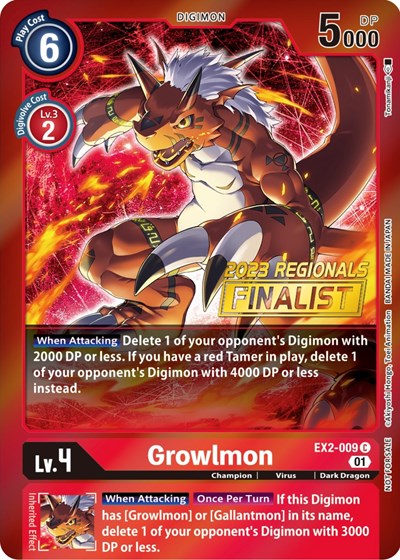
Growlmon (2023 Regionals Finalist)

Digivolution Plug-In S (Event Pack 4)

Offensive Plug-In A (Event Pack 4)

Beelzemon (Alternate Art)

Guilmon (Alternate Art)

Rika Nonaka (Alternate Art)

Mother D-Reaper (Championship 2024 Tamers Pack)

Gigimon (Alternate Art)

Takato Matsuki (Alternate Art)

Sakuyamon (Alternate Art)

Ryo Akiyama (Halloween Event 2024)

Gallantmon Crimson Mode (Alternate Art)

Gummymon (Alternate Art)

Beelzemon Blast Mode (Alternate Art)

Sakuyamon (Premium Heroines Set)

Calumon (Alternate Art)

Viximon (Alternate Art)

Alice McCoy (Event Pack 5)

Beelzemon (Premium Binder Set)

Justimon Blitz Arm (Alternate Art)

Death Slinger (Digimon 3-On-3 Participation)

Gallantmon Crimson Mode
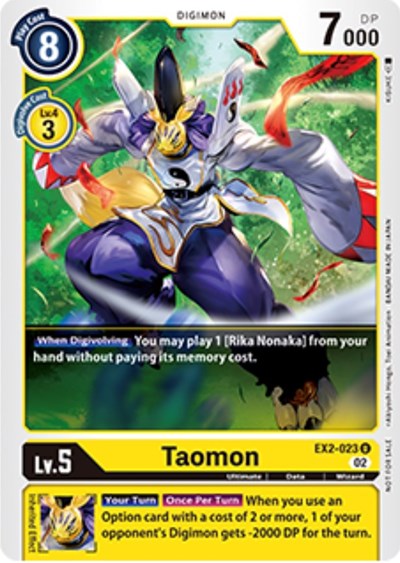
Taomon - EX2-023 (Tamer Party Vol. 6 Promo)

Blue Card (Event Pack 4)
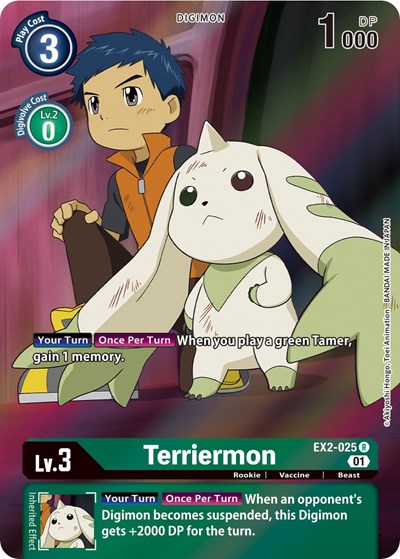
Terriermon (Alternate Art)

Calumon (Digimon Card Game Deck Box Set)
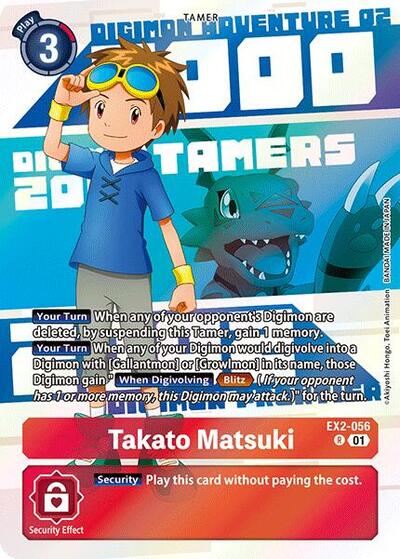
Takato Matsuki (Digimon Animation Series 25th Anniversary Set)
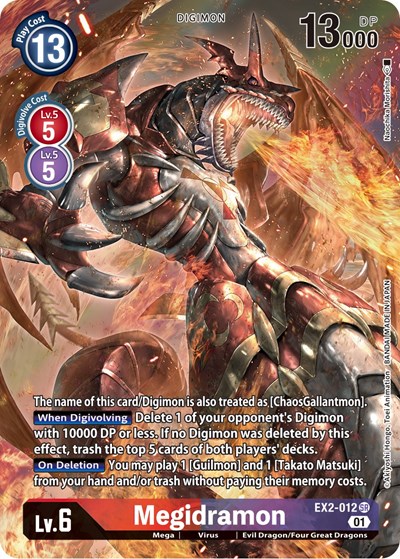
Megidramon (Alternate Art)
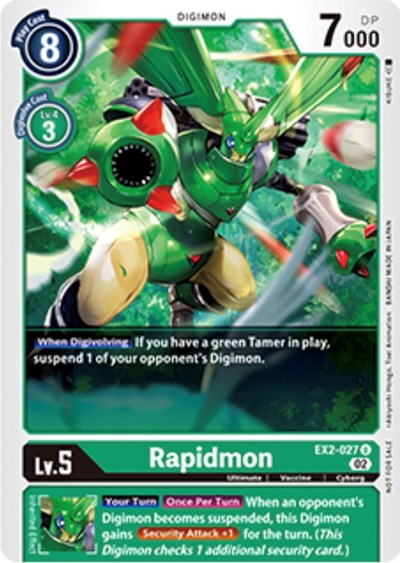
Rapidmon - EX2-027 (Tamer Party Vol. 6 Promo)
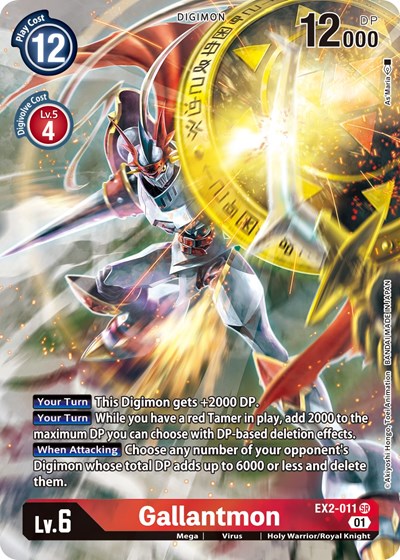
Gallantmon (Alternate Art)
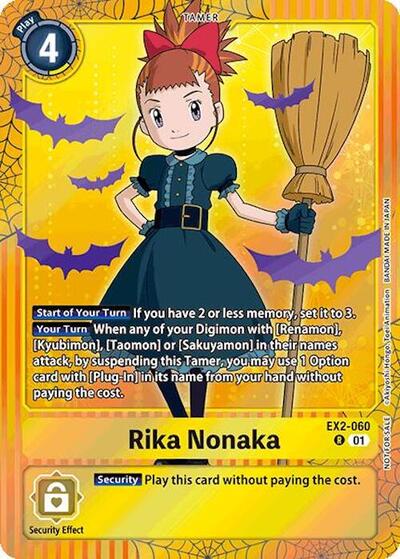
Rika Nonaka (Halloween Event 2024)
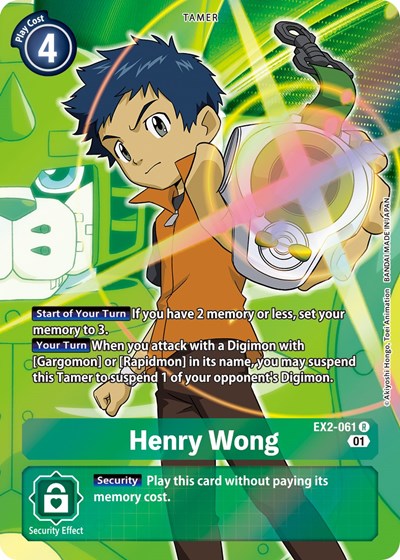
Henry Wong (Alternate Art)
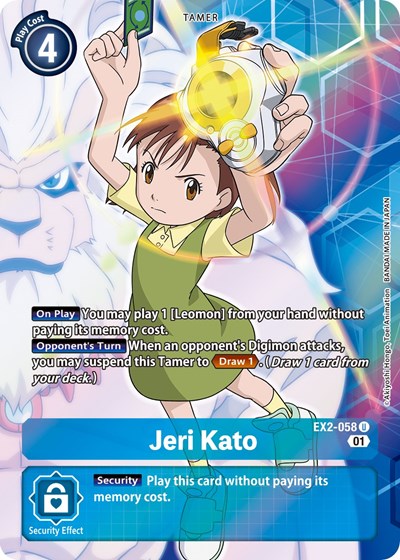
Jeri Kato (Alternate Art)

MegaGargomon (Alternate Art)
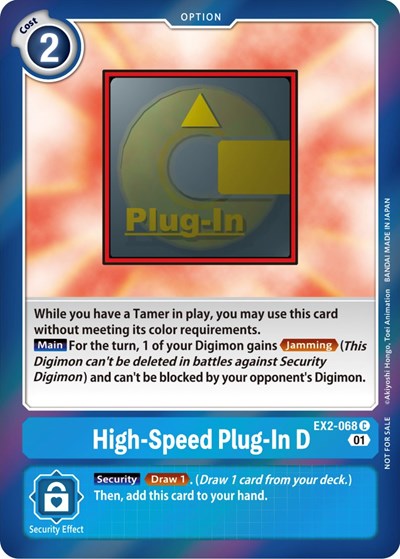
High-Speed Plug-In D (Event Pack 4)
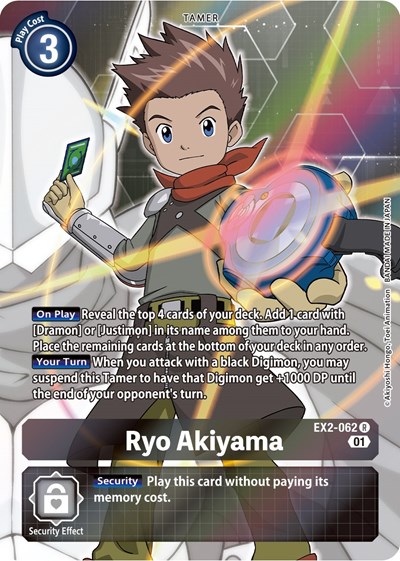
Ryo Akiyama (Alternate Art)

Beelzemon Blast Mode
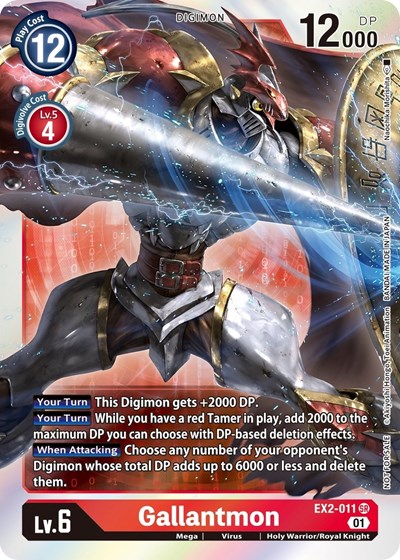
Gallantmon (Gen Con 2022)
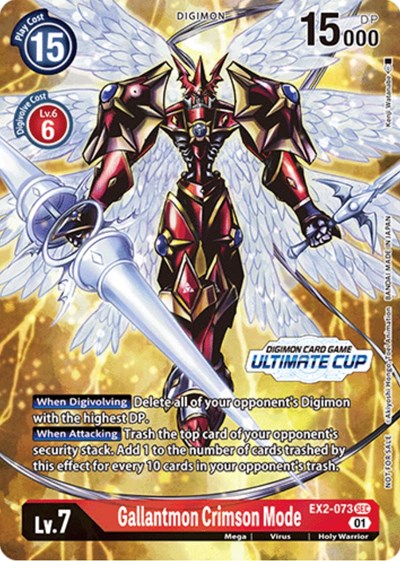
Gallantmon Crimson Mode (Ultimate Cup)
129 singles tracked