Booster Pack
Team Up Booster Pack
- Market Price
- $326.85
- MSRP
- $3.99*
- Against MSRP
- ▲ 8092% vs MSRP
- Loose
- $326.85
- Each, in the sealed product
- $328.24
SM9 · Pokémon
205 cards, led by Latias & Latios GX (Alternate Full Art) at $4,938.36.
Released Feb 1, 2019
Set index · SM9
155.45
+10.61 (+7.33%)3M


The 5 most valuable · $486.95 – $4,938.36
A score that started near 100. It rises when its Near Mint English cards sell for more than they did.
Every way SM - Team Up was sold, priced.
18 products
Booster Pack
Booster Box
InsideReported
Elite Trainer Box
Team Up Elite Trainer Box
$500.00 per pack
InsideReported
Collection Box
Melmetal GX Box
InsideReported
Collection Box
Towering Splash GX Box
InsideReported
Tin
TAG TEAM Tin [Celebi & Venusaur GX]
InsideReported
Tin
TAG TEAM Tin [Eevee & Snorlax GX]
InsideReported
Tin
TAG TEAM Tin [Pikachu & Zekrom GX]
InsideReported
Prerelease Kit
Team Up Prerelease Kit
$325.00 per pack
InsideReported
Preconstructed Deck
Team Up Theme Deck - "Relentless Flame" [Charizard]
InsideReported
Preconstructed Deck
Team Up Theme Deck - "Torrential Cannon" [Blastoise]
InsideReported
Blister
Team Up 3 Pack Blister [Deoxys]
InsideReported
Blister
Team Up 3 Pack Blister [Ultra Necrozma]
InsideReported
Blister
Team Up Premium Checklane Blister [Gyarados]
InsideReported
Blister
Team Up Premium Checklane Blister [Raichu]
InsideReported
Blister
Team Up Single Pack Blister [Mimikyu]
$409.21 per pack
InsideReported
Blister
Team Up Single Pack Blister [Pikachu]
$484.19 per pack
InsideReported
Booster Pack
Team Up - Mini Booster Pack
* Standard MSRP for that product type, or a bundle's count × that price.
Open one. Then see how often each hit turns up.
Pack $328.44
Tap the pack. Every card is drawn from the pack's real odds.
10 cards a pack · 5 common · 3 uncommon · 2 hit slots
Pokémon-GX
1 in 11
packs · 9.29%
Prism Star
1 in 17
packs · 5.96%
Full Art Pokémon-GX
1 in 41
packs · 2.41%
Full Art Trainer
1 in 41
packs · 2.41%
Rainbow Rare
1 in 97
packs · 1.03%
Gold Secret Rare (Trainer or Energy)
1 in 145
packs · 0.69%
Chance in one pack · Near Mint
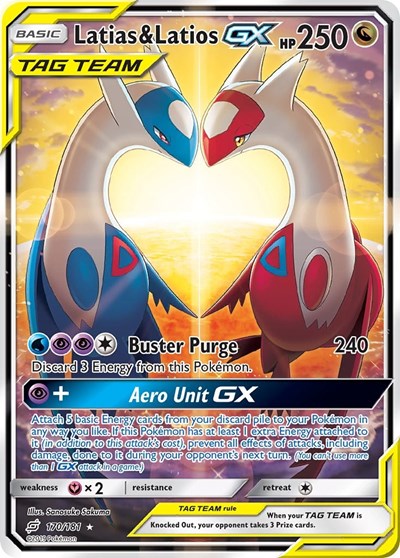
Latias & Latios GX (Alternate Full Art)
$4,938.361 in 539
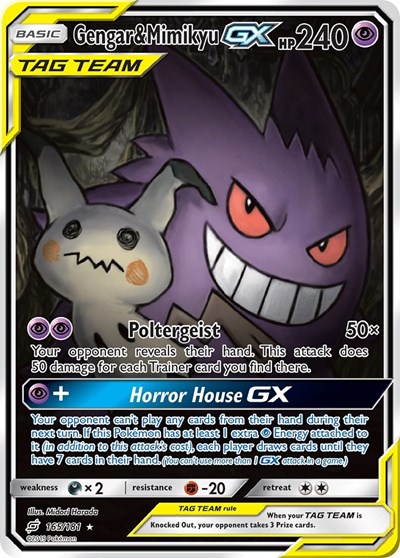
Gengar & Mimikyu GX (Alternate Full Art)
$2,810.981 in 539
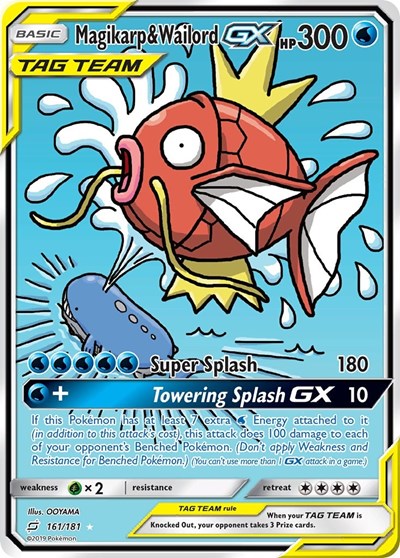
Magikarp & Wailord GX (Alternate Full Art)
$994.001 in 539
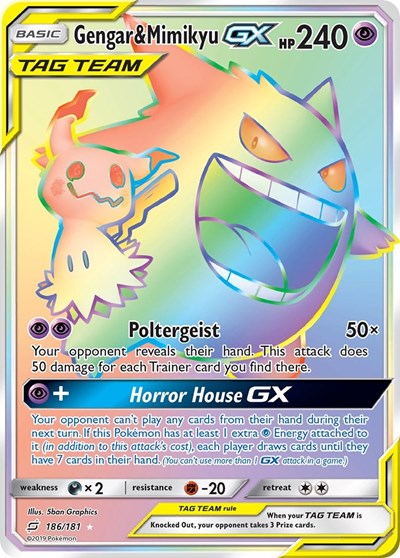
Gengar & Mimikyu GX (Secret)
$670.981 in 971
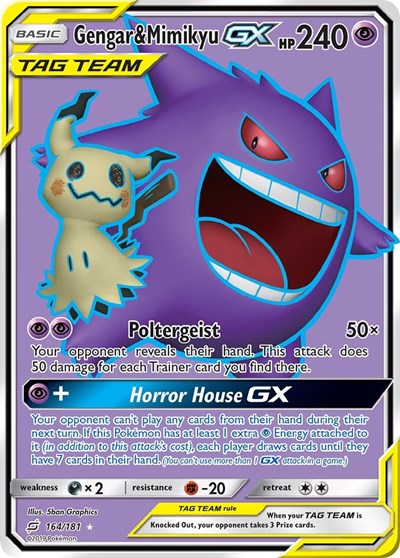
Gengar & Mimikyu GX (Full Art)
$486.951 in 539
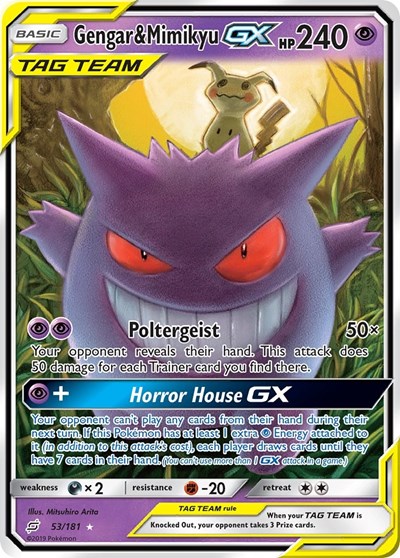
Gengar & Mimikyu GX
$375.341 in 118
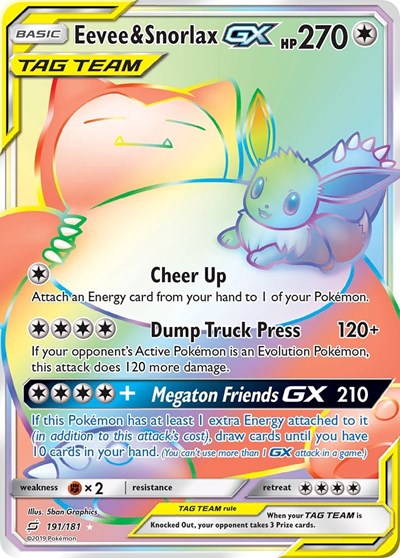
Eevee & Snorlax GX (Secret)
$342.931 in 971
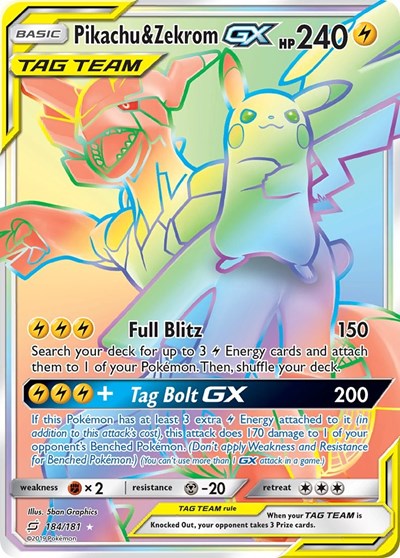
Pikachu & Zekrom GX (Secret)
$250.471 in 971
205 of 205 valued in Near Mint
Latias & Latios GX (Alternate Full Art)
Gengar & Mimikyu GX (Alternate Full Art)
Magikarp & Wailord GX (Alternate Full Art)
Gengar & Mimikyu GX (Secret)
Gengar & Mimikyu GX (Full Art)
Gengar & Mimikyu GX
Eevee & Snorlax GX (Secret)
Pikachu & Zekrom GX (Secret)

Sabrina's Suggestion (Full Art)
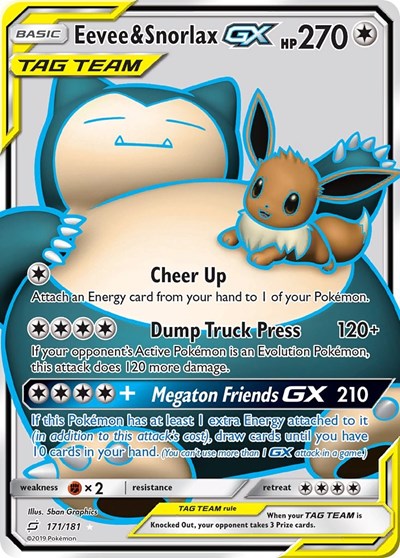
Eevee & Snorlax GX (Full Art)

Latias & Latios GX (Secret)

Pikachu & Zekrom GX (Full Art)

Celebi & Venusaur GX (Secret)

Magikarp & Wailord GX (Secret)

Erika's Hospitality (Full Art)

Magikarp & Wailord GX (Full Art)

Latias & Latios GX (Full Art)

Eevee & Snorlax GX
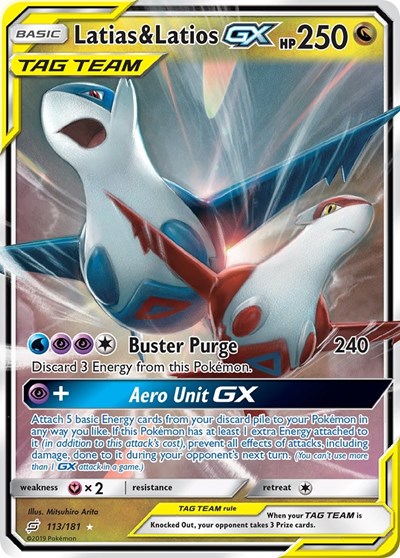
Latias & Latios GX

Jasmine (Full Art)

Celebi & Venusaur GX (Full Art)

Ampharos GX (Secret)

Brock's Grit (Full Art)

Celebi & Venusaur GX

Evelyn (Full Art)

Dana (Full Art)
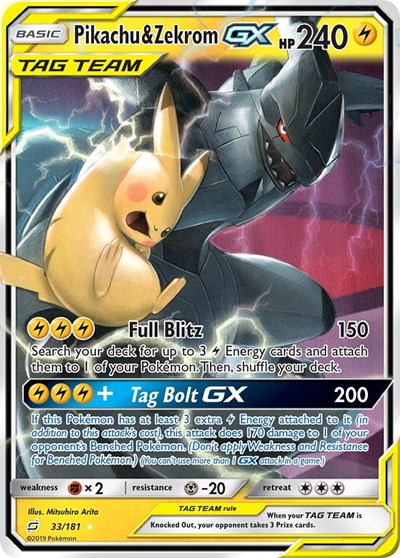
Pikachu & Zekrom GX

Morgan (Full Art)

Hoopa GX (Secret)

Incineroar GX (Secret)

Nita (Full Art)

Electrode
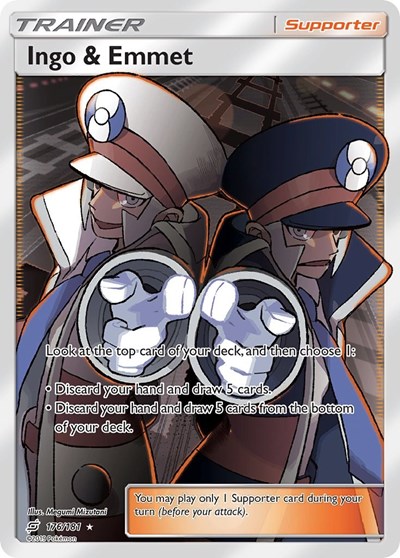
Ingo & Emmet (Full Art)

Ampharos GX (Full Art)
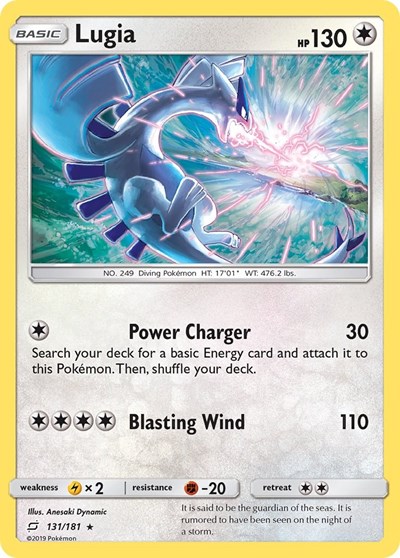
Lugia

Hoopa GX (Full Art)

Shaymin Prism Star

Cobalion GX (Secret)
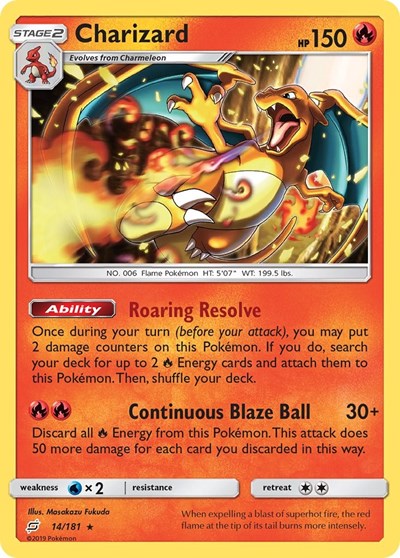
Charizard
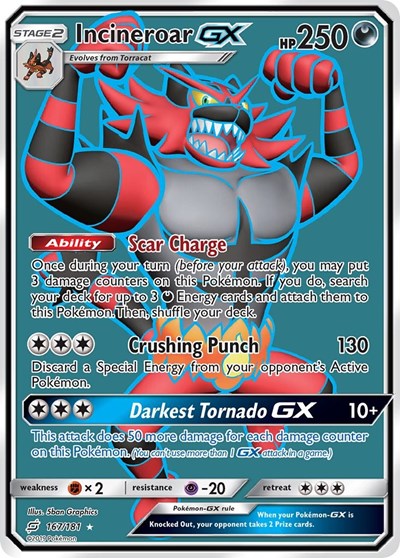
Incineroar GX (Full Art)
205 singles tracked