
SWSD · Pokémon
SWSH: Sword & Shield Promo Cards
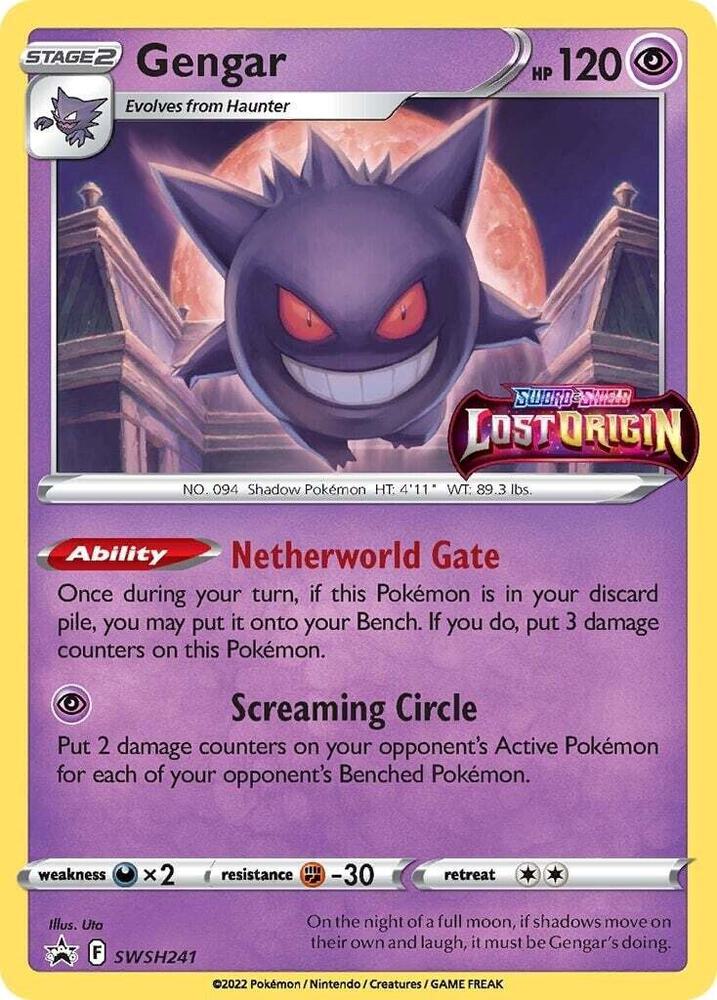
342 cards, led by Gengar - SWSH241 (Prerelease) (Staff) at $2,075.09.
Released Nov 15, 2019
Set index · SWSD
99.01
−0.99 (−0.99%)1Y
- 1W
- −0.99%
- 1Y
- −0.99%


The 5 most valuable · $518.13 – $2,075.09
- Cards
- 342
- Priced printings
- 342
- Sales a week
- 608
- Typical single, Near Mint
- $3.78
- Popularity
- 78/100
- Standing
- #17
The index
A score that starts at 100 and moves with the set's fair value, compared on the same printings week to week.
One Near Mint copy of every printing at fair value; the chase cards move it most.
Master set value
one of every printing · fair value · Oct 31, 2026
- NM
- $11,748.89
- 342 of 342 priced · 100% from sales
- LP
- $6,095.43
- 342 of 342 priced · 99% from sales
- MP
- $4,271.29
- 342 of 342 priced · 97% from sales
- HP
- $3,103.44
- 342 of 342 priced · 94% from sales
- DMG
- $2,606.36
- 342 of 342 priced · 81% from sales
Cards
342 of 343 valued in Near Mint

Gengar - SWSH241 (Prerelease) (Staff)
Promo$2,075.09
Pikachu - 227/S-P
Promo$1,964.58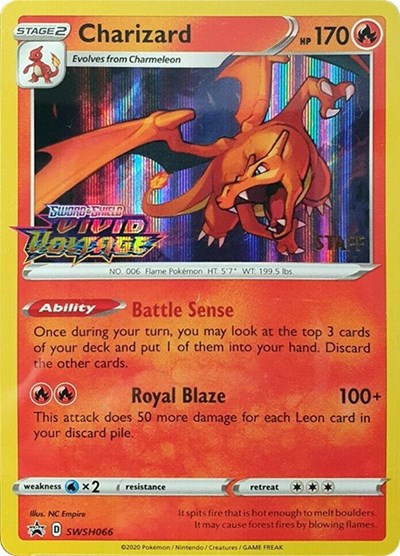
Charizard - SWSH066 (Prerelease) [Staff]
Promo$635.24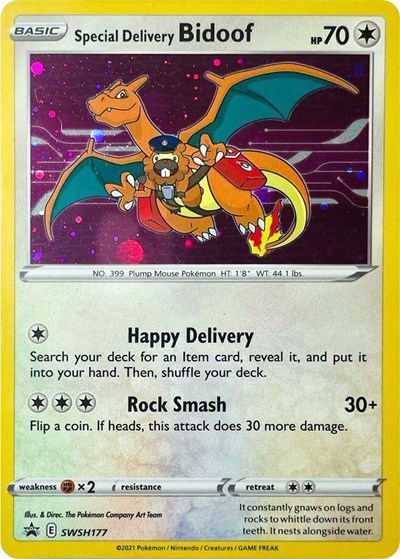
Special Delivery Bidoof
Promo$582.68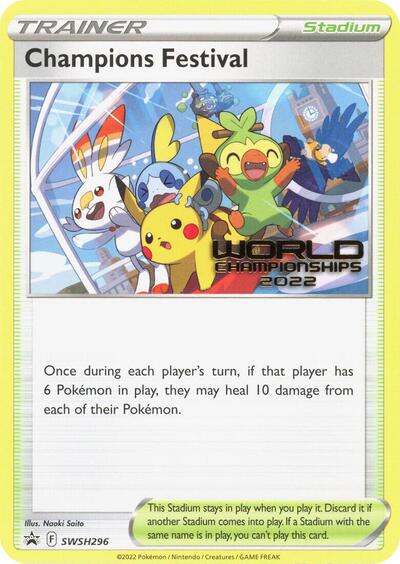
Champions Festival - SWSH296 (World Championships 2022)
Promo$518.13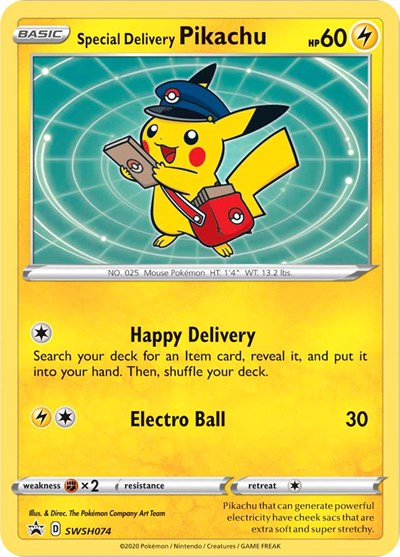
Special Delivery Pikachu - SWSH074
Promo$441.64
Cramorant - 226/S-P
Promo$421.14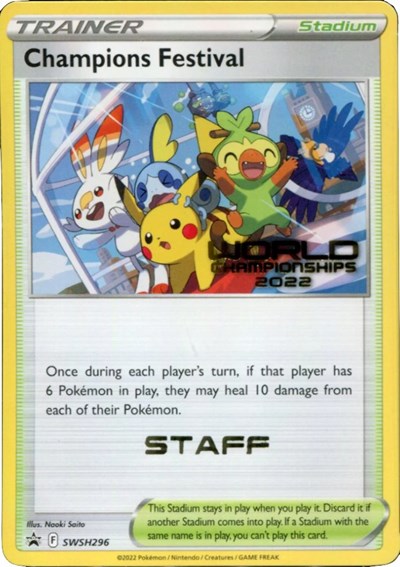
Champions Festival - SWSH296 (World Championships 2022) [Staff]
Promo$416.88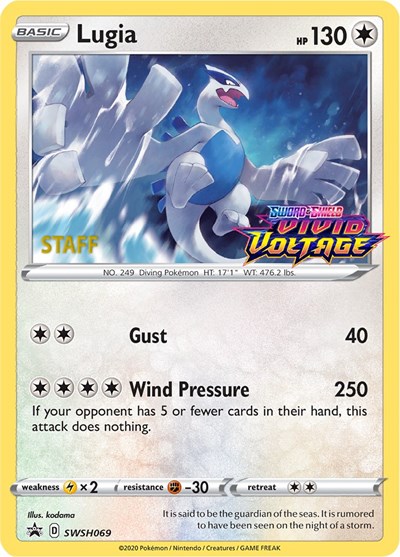
Lugia - SWSH069 (Prerelease) [Staff]
Promo$255.53
Special Delivery Charizard - SWSH075
Promo$182.93
Cinccino - SWSH009 (Prerelease) [Staff]
Promo$169.31
Gengar - SWSH052
Promo$135.28
Pikachu - SWSH020
Promo$106.70
Flapple - SWSH022 (Prerelease) [Staff]
Promo$105.74
Charizard - SWSH066 (Prerelease)
Promo$98.81
Kangaskhan - SWSH038 (Prerelease) [Staff]
Promo$95.91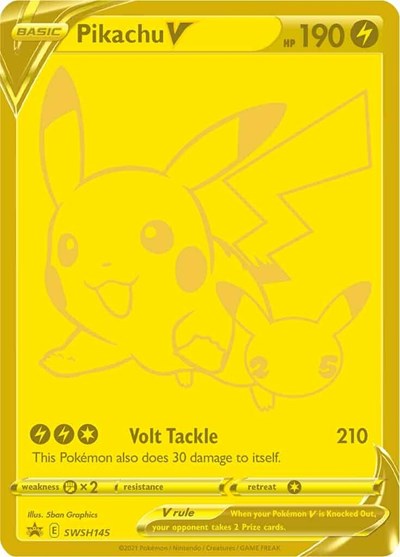
Pikachu V - SWSH145
Promo$92.72
Hydreigon - SWSH037 (Prerelease) [Staff]
Promo$91.90
Vaporeon V - SWSH181
Promo$88.82
Luxray - SWSH023 (Prerelease) [Staff]
Promo$80.71
Frosmoth - SWSH007 (Prerelease) [Staff]
Promo$79.31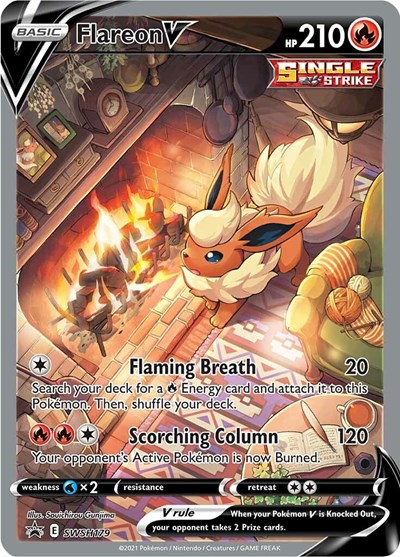
Flareon V - SWSH179
Promo$77.14
Vaporeon VMAX - SWSH182
Promo$75.98
Jolteon VMAX - SWSH184
Promo$71.15
Garbodor - SWSH025 (Prerelease) [Staff]
Promo$68.23
Jolteon V - SWSH183
Promo$67.89
Bulbasaur (Illustration Contest 2022)
Promo$67.66
Greninja (Illustration Contest 2022)
Promo$66.90
Galarian Perrserker - SWSH008 (Prerelease) [Staff]
Promo$66.58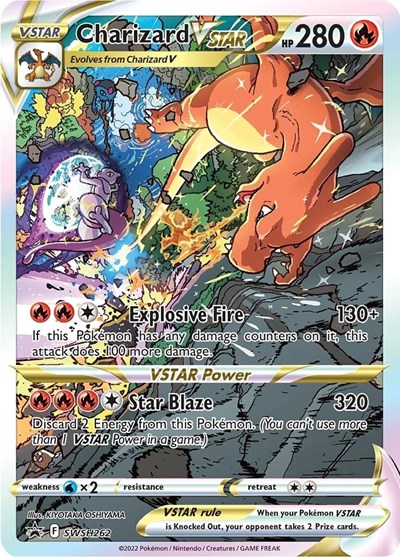
Charizard VSTAR - SWSH262
Promo$66.39
Decidueye - SWSH035 (Prerelease) [Staff]
Promo$62.23
Rapidash - SWSH270 (Prerelease) [STAFF]
Promo$59.39
Donphan - SWSH067 (Prerelease) [Staff]
Promo$58.55
Kirlia - SWSH271 (Prerelease) [STAFF]
Promo$57.90
Archeops - SWSH272 (Prerelease) [STAFF]
Promo$54.17
Flareon VMAX - SWSH180
Promo$51.64
Rillaboom - SWSH006 (Prerelease) [Staff]
Promo$50.21
Arcanine (Illustration Contest 2022)
Promo$49.31
Pikachu - SWSH153 (Holiday Calendar)
Promo$48.72
Arctozolt - SWSH036 (Prerelease) [Staff]
Promo$47.96
In the set
343 singles tracked
- Promo341 · 99%
- Holo Rare1 · 0%
- Ultra Rare1 · 0%
How to read the set index
- What is the typical single?
- The median fair value of the set's Near Mint English singles — the price in the middle, so one chase card can't drag it up. Fair value comes from real sales only; the marketplace's Market Price is shown on card pages but never counted.
- What does the index line show?
- The Set Value Index: one Near Mint copy of every printing at fair value, compared week to week on the same printings, so it moves with the set's value — the chase cards most. It starts at 100; the 90-day figure is that line over the last quarter. Beside it, the typical card (every card counted the same, chases left out) and the chases on their own.
- How is popularity scored?
- Out of 100, against the rest of the game: how much the set's cards sell for, how many of them sell each week, how many cards it holds and how its index has moved. It ranks sets; it isn't a price.